Are original movies better than their sequels?
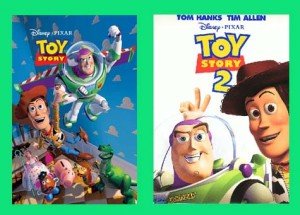
We've gathered some data on movie ratings and their sequels and asked students to analyze the data, decide on some analysis and debate (with their mathematical data) which are better ... the original movies or their sequels. Students see what they can conclude from various types of graphs and consider what size random sampling of movies and their sequels is an adequate, representative population of movies.
This is a very open ended activity that will allow 6th or 7th graders to conduct data analysis at one level: measures of central tendency & variability, box plots,histograms etc. While high school students might work with greater sophistication, doing some of the same work as middle school students, but extending their work to consider the spread of the data, normal curve & standard deviation. The last question in the activity gets at sample size. This is your opportunity to discuss sample size and random sampling and certainty in your data analysis.
For Adventurer members we have an editable Word docx, an Excel sheet of the data and graphs, and solutions.
Find your next lesson
400+ real-world activities, each with a worksheet and answer key.
Browse the library
Comments (0)